
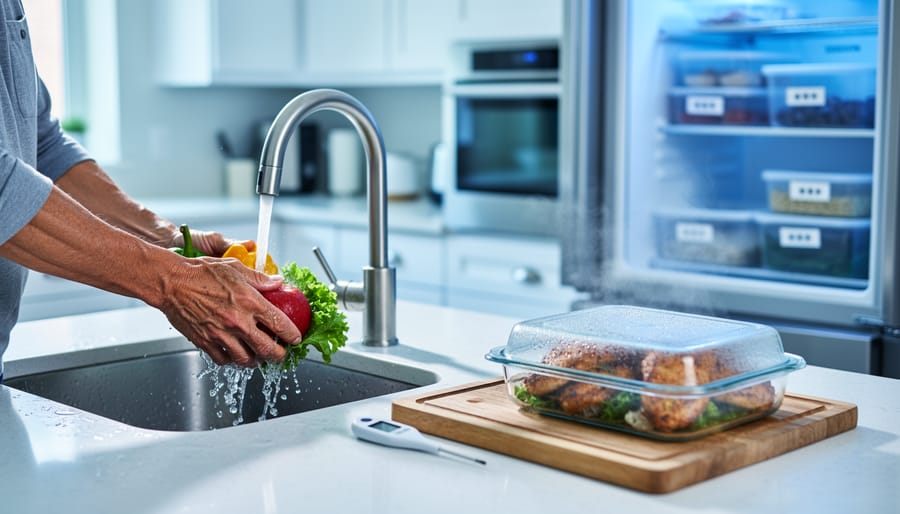
Protecting seniors from foodborne illness requires a three-part approach: strengthening food safety practices in the kitchen, recognizing early warning signs of contamination, and knowing when to seek medical help. Older adults face greater risk due to age-related changes in immune function and digestive health, making prevention essential rather than optional.
When immune systems weaken with age, the body’s ability to fight off harmful bacteria diminishes. The digestive tract produces less stomach acid, one of the body’s first defenses against pathogens in food. Chronic conditions common in older adults and medications that affect immune response further compound vulnerability. These factors transform ordinary food safety mistakes into potentially serious health threats.
Food poisoning in seniors often escalates quickly. What begins as mild discomfort can progress to dehydration, hospitalization, and complications that affect overall health and independence. The good news is that most cases are preventable through consistent application of safe food handling practices, appropriate storage methods, and careful attention to expiration dates and food temperature.
This guide provides a complete framework for reducing foodborne illness risk in older adults. You’ll learn which kitchen tools support safe food preparation, how to implement the critical safety steps that matter most, and how to verify that food is safe before serving. The approach reflects principles of evidence-based poison care emphasizing practical prevention strategies proven to protect health.
Whether you’re a senior managing your own kitchen or a family member supporting an older loved one, these steps work. They require no special skills, just consistent practice and attention to detail.
Why Seniors Are More Vulnerable to Foodborne Illness
Aging brings changes that make foodborne illness both more likely to occur and more serious when it does. Understanding these vulnerability factors helps seniors and caregivers take targeted precautions.
As we age, the immune system naturally becomes less responsive. This means the body’s ability to recognize and fight off harmful bacteria like Salmonella, E. coli, and Listeria weakens over time. What might cause mild symptoms in a younger person can develop into severe illness requiring hospitalization in an older adult.
Stomach acid acts as the body’s first line of defense against ingested bacteria. Many seniors produce less stomach acid due to natural aging or from taking medications like proton pump inhibitors for acid reflux. With this protective barrier weakened, harmful organisms can survive the journey through the stomach and reach the intestines, where they multiply and cause infection.
Chronic health conditions common among older adults, diabetes, kidney disease, liver problems, and cancer, further compromise the body’s ability to fight infection. These conditions affect how quickly the immune system responds and how well it contains bacterial spread. Certain medications, including steroids and chemotherapy drugs, suppress immune function as part of their action.
The senses of smell and taste often diminish with age, making it harder to detect spoiled food. A senior might not notice the sour smell of milk gone bad or the off taste of meat that’s started to turn. This sensory decline removes a natural warning system that younger people rely on.
Decreased saliva production, another age-related change, affects digestion from the start. Saliva contains enzymes and antibodies that help break down food and fight bacteria in the mouth. Less saliva means reduced antimicrobial protection.
What You Need: Essential Tools and Materials for Food Safety
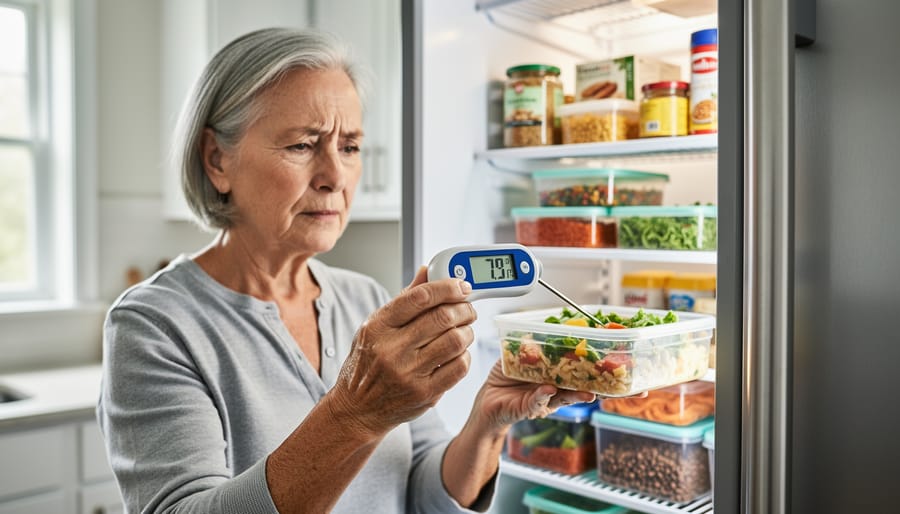
A well-equipped kitchen forms the foundation of effective food safety. You don’t need expensive equipment, but having the right basic tools makes proper handling and storage far easier to maintain consistently.
Core Safety Equipment
- Refrigerator thermometer: Confirms your fridge stays at 40°F or below, the temperature that slows bacterial growth
- Food thermometer: Verifies that cooked foods reach safe internal temperatures, eliminating guesswork
- Airtight storage containers: Prevents cross-contamination and keeps leftovers fresh while clearly showing contents
- Cleaning supplies: Includes dish soap, paper towels, and disinfectant spray for sanitizing surfaces between tasks
- Magnifying glass or large-print labels: Makes expiration dates and cooking instructions readable without strain
Each of these items addresses a specific vulnerability in the food safety chain. Thermometers take temperature out of the realm of guessing, since visual cues like color and texture can mislead. Storage containers create physical barriers between raw and ready-to-eat foods. Cleaning supplies allow you to reset surfaces to a safe state before handling the next ingredient.
The magnifying glass deserves special mention. Small print on packaging frustrates many seniors, leading them to skip checking dates altogether. A simple magnifier or pre-printed large labels you can stick on containers removes this barrier. Some seniors find it helpful to keep a marker nearby for writing purchase or preparation dates directly on containers in their own handwriting.
Keep these tools accessible rather than tucked away. A thermometer that lives in a drawer rarely gets used. Mount the refrigerator thermometer where you can see it when opening the door, and store the food thermometer in a visible spot near the stove.
Critical Safety Warnings: When to Avoid or Discard Food
Certain conditions mean food should never be consumed, regardless of how recently it was purchased. Trust your senses first: visible mold, off odors, slimy texture, or unusual discoloration all signal spoilage. Bulging cans, leaking packages, or containers that release gas when opened indicate dangerous bacterial growth and must be discarded immediately.
Understanding date labels prevents unnecessary waste while maintaining safety. “Use by” dates indicate the last day for peak quality and safety for perishable items. “Best by” or “best if used by” dates reflect quality rather than safety, meaning foods may still be safe after this date if stored properly. “Sell by” dates guide retailers, not consumers. When labels are absent or unclear, write the purchase or opening date on containers with a permanent marker.
The danger zone, between 40°F and 140°F, allows bacteria to multiply rapidly. Food left in this temperature range for more than two hours (or one hour when room temperature exceeds 90°F) should be thrown away, even if it looks and smells fine. This applies to food forgotten on the counter after cooking, groceries left in a warm car, or items at room temperature during meal preparation.
Adopt the “when in doubt, throw it out” principle without exception. The cost of discarded food is far less than the health consequences of foodborne illness. Seniors with weakened immune systems cannot afford to take chances with questionable food. If you hesitate even briefly about whether something is safe, dispose of it. This decisive approach eliminates the guesswork that leads to preventable illness.
Step-by-Step Food Safety Process for Seniors
Shopping and Transport
Start your shopping trip by planning for the shortest possible time between store and home. Shop for perishable items last, after picking up shelf-stable products, so cold foods spend minimal time in your cart. When selecting items, check expiration dates carefully and choose packages with the furthest dates available. If you have difficulty reading small print, bring a magnifying glass or use your phone’s camera to zoom in on labels.
Inspect packaging integrity before adding items to your cart. Look for tears, bulges, or leaks in containers, and avoid cans with dents or rust. For fresh produce, check for bruising or soft spots. When buying eggs, open the carton to ensure none are cracked. In the meat and dairy sections, select items from the back of the display where temperatures tend to be coldest and most stable.
At checkout, request that cold and frozen items be bagged together to help maintain temperature. If your trip home will take longer than 30 minutes, bring an insulated cooler with ice packs, especially during warm weather. Perishable foods should never sit in a hot car. If you need to run additional errands, plan them for after you’ve returned home to refrigerate groceries, or skip the perishable items entirely and return for them later when you can go straight home.
Proper Storage Practices
Set your refrigerator to 40°F or below and your freezer to 0°F or below. Use an appliance thermometer to verify these temperatures weekly, as built-in dials aren’t always accurate.
Store raw meats on the lowest shelf in sealed containers to prevent drips onto ready-to-eat foods. Keep dairy products and eggs on interior shelves where temperatures stay most consistent, not in the door where warmth fluctuates. Place leftovers and opened items at eye level so they’re visible and get used promptly.
Choose clear, airtight containers that let you see contents without opening them. Write the date you opened or cooked each item directly on the container with a permanent marker or large-print label. This eliminates guesswork about freshness.
Organize your refrigerator so older items sit in front of newer ones. Group similar foods together, all dairy in one area, all vegetables in another, making it easier to find what you need and spot items approaching their use-by dates. Keep a small basket near the front for foods that need eating within a day or two.
Avoid overpacking shelves, which blocks cold air circulation and creates warm spots where bacteria multiply faster. If you struggle with bending or reaching, consider storing everyday items at waist height and less frequently used foods higher or lower.
Safe Food Preparation
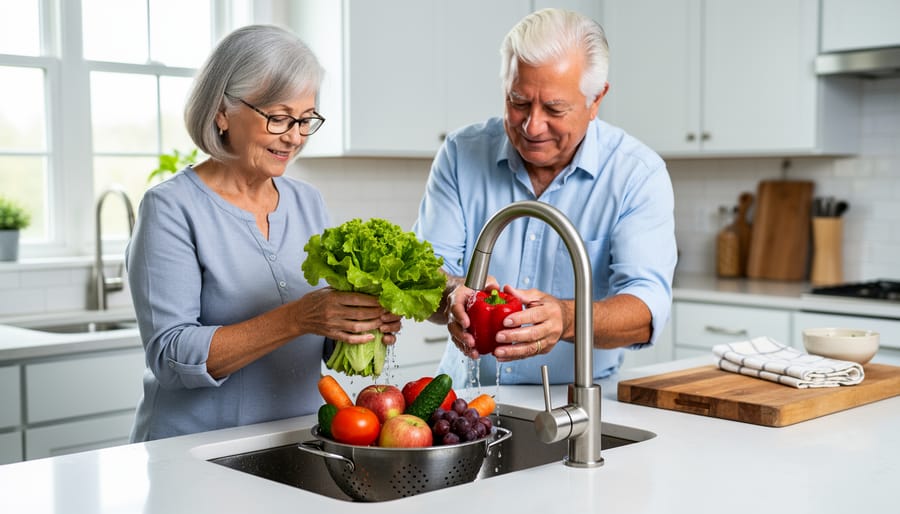
Wash your hands with soap and warm water for at least 20 seconds before handling any food, after touching raw meat or eggs, and after handling trash or touching pets. Seniors with reduced manual dexterity may find liquid soap pumps easier than bar soap. Keep nails trimmed short, as bacteria can hide underneath.
Prevent cross-contamination by using separate cutting boards for raw meat, poultry, and seafood versus ready-to-eat foods like fruits and vegetables. Color-coded boards (red for meat, green for produce) help maintain this separation, particularly helpful for those with memory concerns. Never place cooked food back on a plate that held raw meat without washing it first.
Rinse all fresh produce under running water, even items you’ll peel. Use a vegetable brush for firm produce like melons and cucumbers, as bacteria on the surface can transfer to the flesh when cutting. Pat dry with clean paper towels rather than cloth towels, which can harbor bacteria between washes.
Thaw frozen foods in the refrigerator, never on the counter where bacteria multiply rapidly at room temperature. Plan ahead, as this method takes longer, typically 24 hours for every five pounds. For quicker thawing, submerge sealed packages in cold water, changing the water every 30 minutes, or use the microwave’s defrost setting if cooking immediately afterward.
Cooking to Safe Temperatures
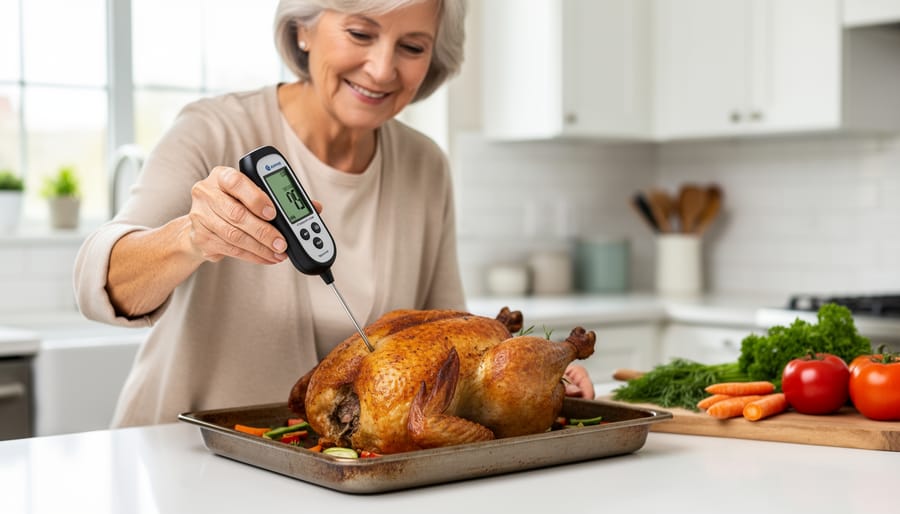
Insert a food thermometer into the thickest part of the meat, away from bone, fat, or gristle. Wait for the reading to stabilize before checking the temperature. For thin foods like burgers, insert the probe sideways to get an accurate reading in the center.
Safe internal temperatures vary by food type. Poultry needs to reach 165°F throughout. Ground meats require 160°F, while whole cuts of beef, pork, and lamb are safe at 145°F followed by a three-minute rest. Leftovers must be reheated to 165°F, not just warmed through.
Visual cues can mislead seniors experiencing age-related changes in vision or smell. Meat can look thoroughly cooked on the outside while remaining dangerously undercooked inside. Color alone won’t tell you if harmful bacteria have been eliminated. Seniors taking medications that suppress immune function have less margin for error with undercooked food.
Clean your thermometer with hot soapy water between uses to prevent cross-contamination. Test it periodically in ice water, it should read 32°F, to ensure accuracy. Keep a written chart of safe temperatures on your refrigerator as a quick reference while cooking.
How to Verify Your Food Is Safe and What to Do Next
After completing your food safety steps, verification helps confirm you’ve protected against foodborne illness. Use these practical checks to ensure your efforts have been effective.
Start by confirming your thermometer readings match safe guidelines. For refrigerators, the display should read 40°F or below; for freezers, 0°F or below. When cooking, verify that your food thermometer shows the correct internal temperature for what you’ve prepared: 165°F for reheated leftovers and poultry, 160°F for ground meats, and 145°F for whole cuts of beef or pork. Insert the thermometer into the thickest part of the food, away from bone or fat, and wait for the reading to stabilize.
Beyond temperature, assess texture and appearance. Properly cooked foods should not have pink centers (except for certain cuts of beef or pork cooked to 145°F), and juices should run clear. Leftovers you’re reheating should be steaming hot throughout, not just warm at the edges.
Use this checklist to confirm proper food safety execution:
- Thermometers show correct temperatures for storage and cooking
- Foods reached safe internal temperatures and held them for required time
- No cross-contamination occurred between raw and ready-to-eat items
- Leftovers are dated and within safe timeline (three to four days for most items)
- No signs of spoilage such as off odors, discoloration, or unusual texture
Track leftover timelines carefully. Most cooked foods stay safe in the refrigerator for three to four days. Label containers with preparation dates so you can discard items that exceed this window.
If you or a senior loved one develops symptoms such as nausea, vomiting, diarrhea, or abdominal pain after eating, contact a healthcare provider promptly. Seniors should seek immediate medical attention if symptoms are severe or persistent. For questions about potential food contamination or accidental ingestion of unsafe substances, similar to concerns about hydrogen peroxide exposure CAPCC provides 24/7 guidance at 1-800-268-9017. Document what was eaten, when symptoms started, and any relevant details to share with healthcare professionals.
Common Questions About Elderly Food Poisoning Prevention
How long can I safely keep leftovers in the refrigerator?
Most cooked leftovers remain safe for three to four days when stored at 40°F or below. Label containers with the date you cooked the food, and discard anything that has been refrigerated longer than four days, even if it looks and smells fine.
Does reheating food kill all harmful bacteria?
Reheating to 165°F kills most bacteria, but it does not eliminate toxins that some bacteria produce as they multiply. If food has been left in the danger zone too long or shows signs of spoilage, reheating will not make it safe to eat.
What special precautions should I take if I have memory problems or live alone?
Use a timer when cooking, set phone reminders to check expiration dates weekly, and consider pre-portioned meals or meal delivery services that reduce preparation steps. A simple daily checklist posted on the refrigerator can help you remember to check food temperatures and discard items past their safe window.
How can caregivers help with food safety without taking away independence?
Work collaboratively by organizing the kitchen for easy access, pre-labeling containers with clear dates, and checking refrigerator temperatures weekly rather than monitoring every meal. Focus on setting up systems that make safe choices the easiest choices, and frame conversations around health goals rather than restrictions.
Many seniors and caregivers also wonder whether certain foods become safer with age or special handling. The answer is no: high-risk items like raw eggs, unpasteurized dairy, and undercooked meat remain risky regardless of preparation method. Understanding why evidence matters in food safety helps you distinguish between kitchen myths and practices backed by research.
If you suspect food poisoning, watch for symptoms like nausea, vomiting, diarrhea, or abdominal cramping. Contact your healthcare provider if symptoms are severe, persist beyond a day or two, or if you develop a high fever. Seniors with underlying health conditions should seek medical guidance earlier rather than waiting to see if symptoms resolve on their own.
Preventing food poisoning in seniors doesn’t require perfection, just consistent attention to a few key practices. By following the storage, preparation, and temperature guidelines outlined in this guide, you significantly reduce risk while maintaining independence and confidence in the kitchen. These habits become second nature with repetition.
If you ever have questions about food safety, suspect foodborne illness, or need guidance on whether something is safe to eat, the Canadian Association of Poison Control Centres provides 24/7 poison guidance at no charge. Our team is here to support you with evidence-based information tailored to your specific situation, including concerns about food poisoning.
Share this information with family members and caregivers who support seniors in your life. Food safety is a team effort, and open communication helps everyone stay protected without creating unnecessary worry. Work with your healthcare provider to address any personal health factors that may affect your food safety needs, from medication interactions to immune system considerations. Together, we can create a safer environment where seniors continue to enjoy their meals with confidence.