
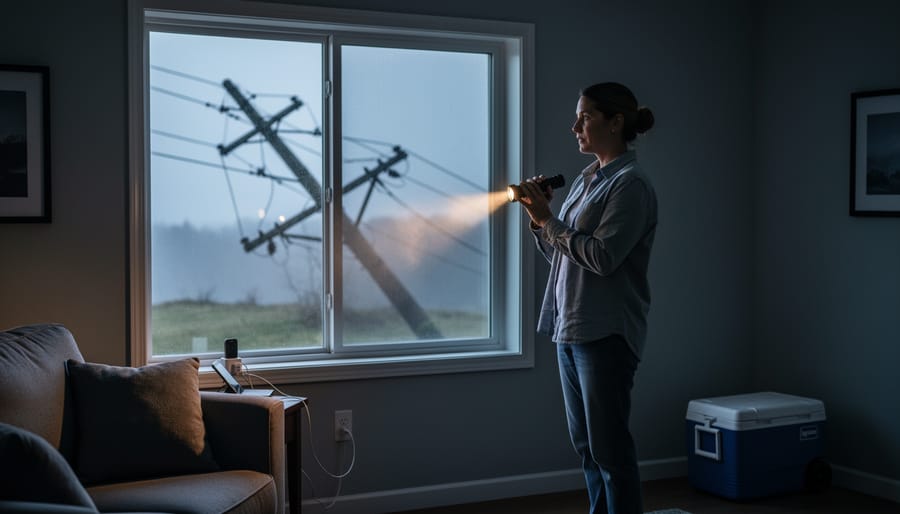
Staying safe during a power outage comes down to a few simple habits: treat downed lines as live, keep generators and fuel-burning equipment outdoors, keep water away from anything electrical, and plan ahead for food, medications and medical equipment. Most outage-related harm is preventable, and the steps are far easier than they sound.
The main risks are electric shock, fire, carbon monoxide poisoning and spoiled food or mishandled medications. Each one tends to appear when people improvise in the dark, using a candle, a generator in the garage or a gas oven for warmth. A little preparation before the lights go out replaces guesswork with calm, confident action.
The ten tips below are grouped by theme and written for families, caregivers and healthcare professionals alike. They focus on practical, everyday steps rather than technical detail, and they work best alongside guidance from your local utility and emergency services, who know your area’s conditions and can advise on restoration and any local warnings. Safety is a shared effort. Checking on a neighbour, talking through a plan with your household and speaking with your pharmacist or care team about medication needs all make a real difference. Let’s walk through them together, starting with what to do the moment the power goes out.
How These Power Outage Safety Tips Were Chosen
We chose these tips with everyday households in mind, drawing on the same evidence in poison care and prevention that shapes our public education. Each one reflects advice widely shared by recognized public safety and health authorities, including utility companies, fire services and public health agencies.
Every tip had to meet a few simple standards:
- Practical for any household, regardless of home type or budget.
- Easy to understand without technical knowledge.
- Relevant to health and poison prevention.
- Consistent with guidance from recognized safety authorities.
We favoured steps that are simple and low-cost, such as keeping a flashlight handy or knowing where to find your poison information number. Nothing here requires special tools or training.
One important reminder: your local utility and emergency services always have the final word. If their instructions differ from anything you read here, follow theirs. They know your area, your infrastructure and any hazards specific to your community. Think of this list as a calm starting point you can adapt, ideally alongside your family, neighbours and healthcare providers.
Staying Safe Around Electricity When the Lights Go Out
1. Treat Every Downed Power Line as Live
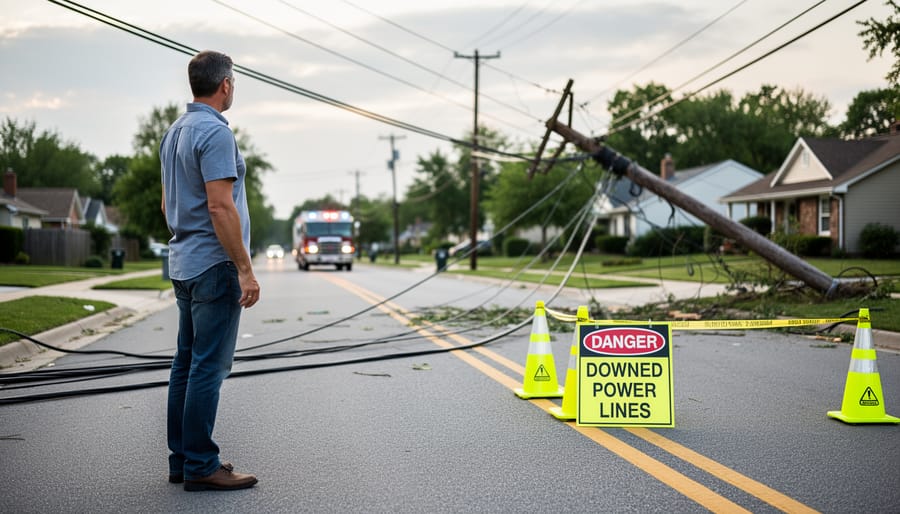
A downed power line can look completely harmless. It may be lying quietly on the grass or resting against a fence, and it can still be energized. The safest habit is to treat every fallen line as live and keep well back from it.
That distance should also apply to anything the line is touching, including puddles, wet ground, fences, trees and vehicles, because these can carry electricity too. Stay far away, and gently warn children, neighbours and passersby to do the same. Then contact your utility company or local emergency services and let trained crews take it from there.
Waiting a little longer for help is always the calmer, safer choice.
2. Unplug Appliances and Sensitive Electronics
When power comes back on, it doesn’t always return smoothly. A sudden surge of electricity can damage refrigerators, televisions, computers and other items with sensitive circuitry. Once it’s safe to do so, unplug major appliances and electronics, or switch off the wall socket they use, so they aren’t connected when the supply resumes. Surge protectors can help too, though unplugging is the simpler step.
Leave one lamp switched on. When the light comes on, you’ll know power has returned, and you can then plug devices back in one at a time rather than all at once. Waiting a few minutes before reconnecting everything gives the supply a chance to settle.
3. Keep Water Away From Electrical Equipment
If water has entered your home, treat anything electrical as a potential hazard. Water conducts electricity, so wet outlets, power strips, appliances and cords can carry current even when the power seems to be off. Avoid touching them, and never stand in standing water while using or reaching for electrical equipment.
If it is safe to do so, turn off the main power at the breaker panel from a dry spot. If the panel itself is wet or you cannot reach it safely, leave it alone and contact your utility provider or emergency services.
Wait for a qualified electrician to inspect your wiring, outlets and appliances before restoring power. Equipment that has been wet may look fine yet still be unsafe, so it is wise to have it checked first.
4. Choose Flashlights and Battery Lanterns Over Candles
Battery-powered lighting is the safer way to see during an outage because it removes open flame from your home. Candles can tip over, burn down quickly, or ignite curtains and bedding, and a darkened house makes those mistakes easier to miss. Flashlights and battery lanterns stay cool and steady, which makes them a much better fit for homes with young children, older adults and pets who may bump into or knock over a lit candle.
Keep a flashlight or lantern in a few easy-to-reach places, such as the kitchen, a bedroom and near the front door. Store spare batteries beside them, in a spot every family member can find even in the dark. Check them now and then so you are not discovering dead batteries when the lights go out.
5. Run Generators Outdoors, Far From Windows and Doors
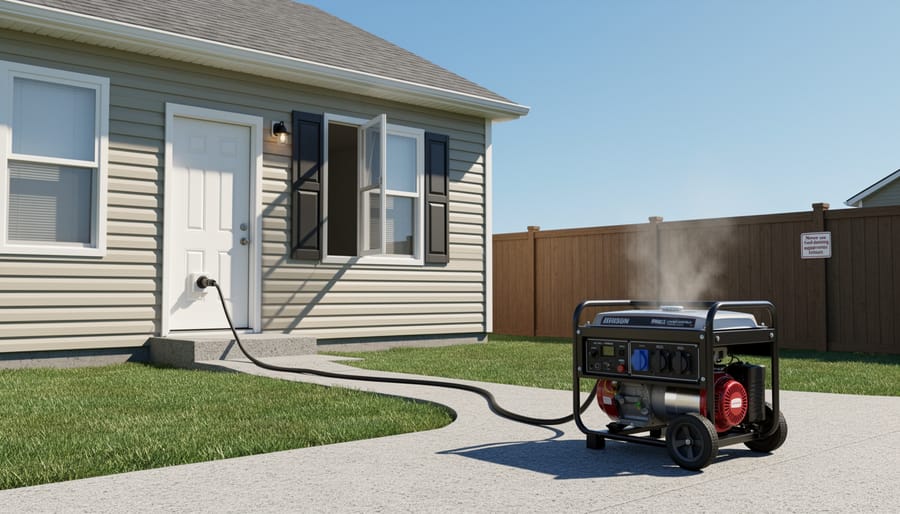
Generators, camp stoves, charcoal grills and similar fuel-burning devices are handy when the lights go out, but they all produce carbon monoxide. This gas has no smell, colour or taste, so you can be exposed without realizing it. That is why these devices must never be used inside a home, garage, shed or any other enclosed space. Keep a generator outdoors and well away from windows, doors and vents, so exhaust can’t drift back inside.
At CAPCC, preventing poisonings is central to our mission, and carbon monoxide is one of the most preventable causes. A carbon monoxide alarm with battery backup gives you an important layer of protection, since it keeps working even when the power is off.
If anyone in your household feels unwell with a headache, dizziness or nausea, treat it seriously. Get everyone into fresh air, then seek medical help promptly or call your local poison information line for guidance. Acting early matters, and no one should feel hesitant about asking for help.
6. Never Heat Your Home With a Gas Oven or Outdoor Equipment
Gas ovens, stovetops, camp stoves, grills and outdoor patio heaters are built for a specific job, and warming a living space is not it. They are designed to be used with plenty of fresh air moving past them. Indoors, especially when windows are closed to keep warmth in, they can release carbon monoxide, an odourless gas that is hard to notice until someone feels unwell. They also create a real fire risk when left on for hours.
It’s completely understandable to reach for whatever is on hand when the house gets cold. The good news is that a few simple, safer habits can keep everyone comfortable.
Start with layers. Several thin layers of clothing trap warmth better than one heavy piece, and a hat and warm socks make a noticeable difference. Blankets and sleeping bags can be shared, which is a comforting option for children and older adults. Gathering everyone in one room also helps, since you can close the doors to unused rooms and keep the warmth you do have from spreading out.
If it is still too cold, consider spending time somewhere that has power and heat. A local warming centre, or the home of a family member or friend, is often the safest and most comfortable choice, particularly for people who are more sensitive to the cold. Your local authority or utility can usually tell you where warming centres are open.
If anyone develops a headache, dizziness or nausea, move to fresh air and seek medical help or call a poison information line promptly.
Protecting Your Family’s Health and Food Safety
7. Keep Refrigerator and Freezer Doors Closed and Check Food Carefully
Every time the refrigerator or freezer door opens, cold air escapes, so keep both closed as much as you can during an outage. A closed, full freezer tends to hold its cold longer than a half-empty one, which is one reason many families keep ice packs or bottled water tucked inside.
If you have an appliance thermometer, place one in each compartment. It gives you a clear reading once power returns, rather than leaving you to guess by touch or smell. Your local public health agency publishes guidance on how long perishable foods such as meat, dairy, eggs and leftovers can safely stay warm, so check their advice for the exact timeframes and follow it.
When you’re unsure whether something is still safe, the sensible rule is simple: when in doubt, throw it out. Spoiled food can cause illness, and appearance or smell isn’t always a reliable sign. Letting go of a few groceries is far easier than recovering from food poisoning.
8. Plan Ahead for Medications and Medical Equipment
Power cuts can disrupt medicines and equipment that many people rely on every day, so it helps to plan before an outage happens. The most useful step is a conversation with your care team. Doctors, nurses and pharmacists can explain which medications are sensitive to temperature, what to do if they warm up, and how to keep treatment on track if the power stays off.
Bring a short checklist to your next appointment or pharmacy visit:
- Which of your medications need refrigeration, and how to store them during an outage
- A backup power or manual plan for any powered medical devices you use
- A current written medication list, including doses, to keep with your outage kit
- Emergency contacts for your care team, pharmacy, utility company and local emergency services
Caregivers and family members should hear this plan too, so everyone knows what to do if you need help. Planning together means support is ready when you need it.
9. Keep Cleaning Products and Medications Safely Stored in the Dark
When the lights go out, routines slip, and that can raise the chance of an accidental poisoning. In dim light, it’s easy to mistake one bottle for another, take the wrong pill, or leave a product within a curious child’s reach. Young children and older adults can be especially vulnerable during these disruptions.
A few calm habits help. Keep household cleaning products, medications and fuel in their original, labelled containers so nothing is mistaken for a drink or a daily medicine. Store them up high or in a closed cabinet, away from little hands. Read labels with a flashlight before using or giving anything, rather than guessing in the dark.
It also helps to keep your local poison information number written down where everyone can find it, such as on the refrigerator or in your outage kit. If you suspect someone has swallowed or breathed in something harmful, call right away for guidance. Your pharmacist or healthcare provider can also help you plan safe storage.
10. Build a Simple Outage Kit and Check on Your Neighbours
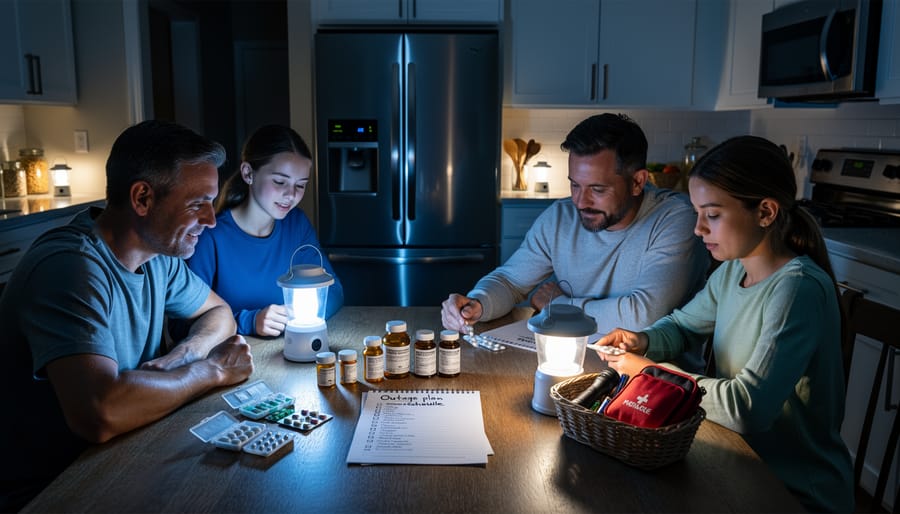
A simple outage kit takes the guesswork out of a stressful moment. Keep it in one easy-to-find spot, and make sure everyone in the household knows where it is. A good basic kit includes:
– Flashlights or battery lanterns, plus spare batteries
– Bottled water
– Non-perishable food that needs no cooking
– First aid supplies
– A current medication list
– A battery or hand-crank radio
Check the kit a couple of times a year so batteries, food and supplies stay fresh.
Preparation is also a shared effort. Once your own household is settled, check in on older neighbours and anyone who relies on powered equipment, such as oxygen concentrators or refrigerated medications. A short visit or phone call can make a real difference, and talking with your healthcare provider ahead of time helps everyone be ready together.
Common Questions About Staying Safe During an Outage
Outages bring up a lot of “what if” moments, and a few answers can make them feel far more manageable.
What should I do if someone may have been exposed to carbon monoxide?
Get everyone into fresh air right away, then seek emergency medical help or call your local poison information line. Headache, dizziness, nausea or unusual drowsiness are common warning signs, so take them seriously even if symptoms seem mild.
Is it ever safe to use a gas stove or outdoor heater for warmth?
No. Cooking appliances and outdoor heaters aren’t designed to heat a home and can release carbon monoxide indoors. Warm layers, blankets, or a visit to a warming centre or a relative’s home are safer choices.
How long can food stay in the refrigerator without power?
The answer depends on your food and how warm it gets, so check guidance from your public health agency or food safety authority instead of relying on guesswork. If you’re unsure about an item, it’s wiser to discard it.
Who can I contact with poison-related questions?
Your local poison information line is the best first call, and it’s worth keeping the number somewhere easy to find in a dim room. Staff can advise on swallowed or inhaled products and tell you whether you need urgent care.
Because routines get disrupted and lighting is poor, mix-ups with household products can happen more easily. Even common items can cause harm if swallowed or mishandled, as explained in this overview of hydrogen peroxide poisoning. When you’re unsure whether something is a concern, asking early is always better than waiting, and your healthcare team can help you plan ahead.
Staying safe in a power outage comes down to a few thoughtful habits: keeping a safe distance from downed lines, choosing battery lighting over flames, running fuel-burning equipment outdoors, and planning ahead for food and medications. Preparation works best as a shared effort, so talk it through with your family, check in on your neighbours, and involve your healthcare providers where medications or medical equipment are part of the picture. If you have questions about carbon monoxide, household products or other poison-related concerns, CAPCC is here to offer education and support. Take a few minutes to review your outage plan and restock your kit before the next one arrives, so you can face it calmly and with confidence.