
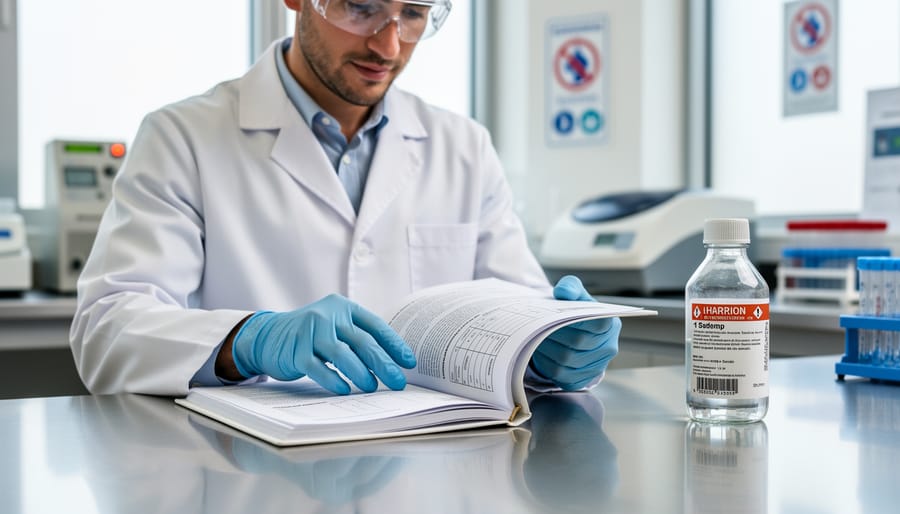
Laboratories keep research chemicals, including canadian peptides safe by following a simple sequence: identify the hazards, estimate who could be exposed, put controls in place, and prepare for emergencies before any work begins. Toxicologists check all of this first, reviewing what a substance can do to the body, how it might enter it, and what protections are needed. Most labs can follow this process with careful planning and the right documentation, and the core ideas are easy to grasp even without a science background.
Why does that early review matter so much? Because most incidents are preventable when the risks are understood in advance. A toxicologist looks at hazard data, exposure routes such as skin contact, inhalation, or accidental ingestion, and the quantity being handled. Suppliers of research materials typically provide documentation that helps labs begin this assessment. Our guide on 5 things about poison offers a helpful foundation if you’re new to how toxic exposures occur.
Safety also depends on teamwork. Labs work alongside healthcare providers and poison support services so that, if something does go wrong, the right help is a quick call away. Below, you’ll find the tools to have on hand, key warnings, the steps labs follow in order, and how to verify that everything is working as intended.
What Toxicologists Look at Before a Chemical Ever Enters the Lab
Confirming the Identity and Known Hazards of the Substance
Every safety decision in a lab builds on one question: what exactly is this substance? If the answer is uncertain, the controls chosen after it may not fit the actual hazard. That is why a toxicologist’s first check is identity, not equipment.
Identification usually draws on several sources that should agree with one another:
– The chemical name and any registry number on the container label
– The supplier’s documentation, including a certificate of analysis where one is provided
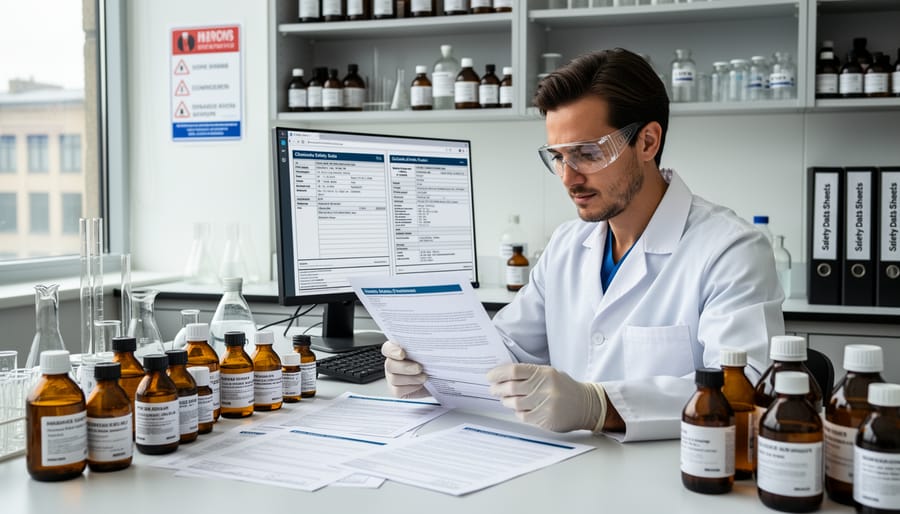
– The safety data sheet (SDS), which describes known hazards, handling advice, and first-aid measures
– The container itself, which should be intact, clearly labelled, and dated
When these sources match, the team can trust the information it is working from. When they don’t, such as a faded label, a mismatched name, or a missing SDS, the sensible response is to pause. Work waits until the discrepancy is resolved.
Sometimes information is simply incomplete. A newly developed compound may have little or no published safety data. In that case, a toxicologist doesn’t guess. They look for what is known about closely related substances, consider the physical form and likely exposure routes, and recommend a cautious approach. In practice, that means treating the material as more hazardous until evidence says otherwise, and limiting both the amount used and the number of people involved.
This careful, shared approach is reassuring rather than alarming. Researchers, safety officers, and toxicologists compare notes, document what is and isn’t known, and revisit those notes as new information arrives. Asking “what do we actually know about this?” is a sign of good practice, and it sets the stage for everything that follows.
Understanding How Exposure Could Happen
Once a toxicologist knows what a substance is, the next question is how it could actually reach a person. A chemical only harms the body if it gets in or onto it, so mapping those pathways comes before any decision about equipment or procedure.
There are four main routes of exposure:
- Breathing in: dust from a powder, mist from a liquid, or vapour escaping an open container.
- Skin or eye contact: a splash during pouring, a contaminated glove, or touching your face with a hand that picked up residue.
- Swallowing: usually indirect, such as eating or drinking in a work area, or handling food with unwashed hands.
- Accidental injection: a needle-stick or a cut from broken glass that carries the substance into the skin.
The physical form of a chemical changes which routes matter most. A fine powder can drift into the air and be inhaled without anyone noticing, or settle on surfaces and hands. A liquid is more likely to splash or spill, so skin and eye contact become the bigger concern. Vapours spread invisibly through a room, which makes breathing in the main worry even when nothing looks wrong.
This is why thinking through exposure routes shapes every later control. If inhalation is the main risk, ventilation and containment take priority. If splashes are likely, eye protection and careful pouring matter more. By reasoning about the pathway first, teams choose protections that fit the real risk rather than applying a one-size-fits-all checklist.
Tools and Materials a Safe Lab Has Ready
Before any bench work begins, a well-prepared lab makes sure its safety tools are in place, in good working order, and easy to find. Think of it as setting the table before a meal: nobody wants to hunt for the essentials halfway through.
Information and documents
– Safety data sheets (SDS). Each substance should have one on hand. It summarizes known hazards, protective measures, and first-aid advice, and it is usually the first thing a toxicologist asks to see.
– Written procedures. Clear instructions for the task and for what to do if something goes wrong keep everyone working from the same plan.
– Emergency contact information. Posted where people can see it, this should include the supervisor, the safety officer, local emergency services, and poison information lines such as CAPCC’s 24/7 service.
Protective equipment and building features
– Personal protective equipment (PPE). Gloves, safety eyewear, and lab coats act as a barrier between a person and a substance. The right type depends on the chemical, which is why the hazard review comes first.
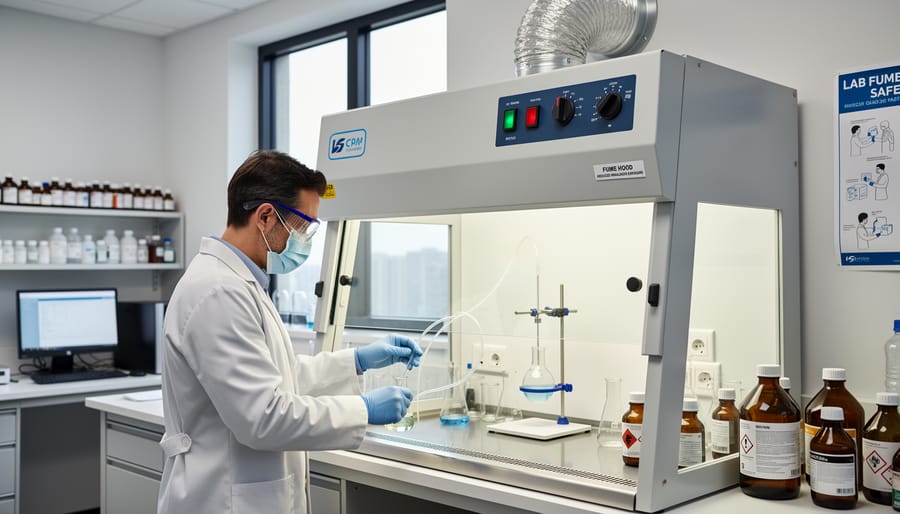
– Ventilation. Fume hoods and similar systems draw vapours and fine dust away from the person working, lowering the chance of breathing them in.
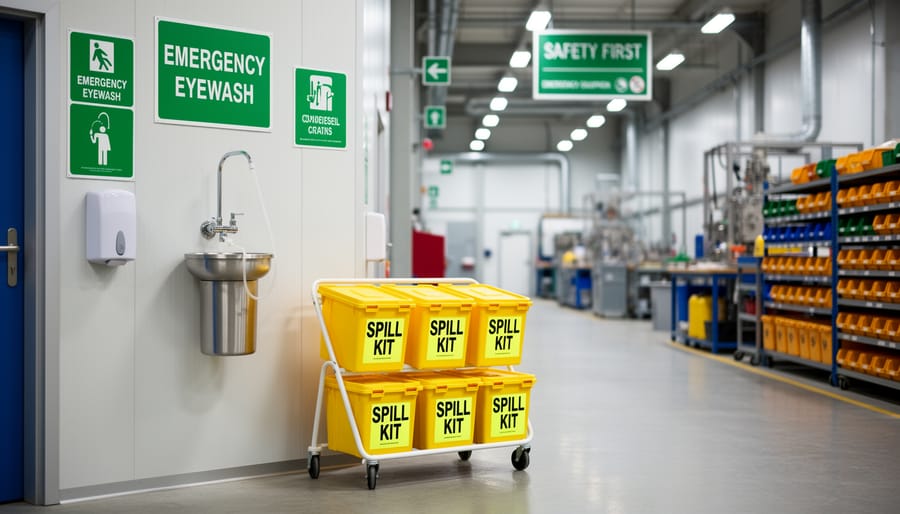
– Eyewash stations and safety showers. These allow quick rinsing after a splash. Staff should know where they are and have a clear path to them.
– Spill kits. Absorbent materials, waste bags, and instructions let a trained person contain a small spill promptly and safely.
Storage
– Labelled, compatible storage. Every container should be clearly marked, and chemicals that react badly together should be kept apart. Good labelling prevents mix-ups, and sensible storage prevents accidents.
A simple habit helps tie this together: before starting, walk through the checklist and confirm that each item is present, accessible, and working. If anything is missing, pausing to ask for help is good practice, not a delay.
Safety Warnings and Stop Conditions Every Lab Worker Should Know
Most lab accidents are preventable, and the best prevention is knowing when to stop. Pausing isn’t a sign of doubt. It’s a sign of good judgment, and every well-run lab expects it.
A few simple rules cover most situations:
– Never work with an unidentified substance. If you can’t confirm what it is, treat the task as not ready to begin.
– Avoid working alone with higher-hazard materials. A second person can raise the alarm or help quickly if something goes wrong.
– Never skip protective equipment for a “quick” task. Short jobs cause plenty of exposures, because that’s when habits slip.
– Keep food and drink out of work areas. Swallowing even small traces is an easily avoided route of exposure.
Clear safety signs help everyone recognize restricted areas, required protective equipment, and where emergency stations are located. Take a moment to read them, especially in a space you don’t use every day.
Stop and ask for help whenever something looks, smells, or behaves differently than expected, or when a procedure doesn’t match what you were trained to do. Supervisors, safety officers, and toxicologists would much rather answer a question than respond to an incident. If you’re unsure whether an exposure has occurred, contact your poison information service early. Specialists can offer calm, practical guidance around the clock, and asking sooner almost always leads to better outcomes.
A Step-by-Step Process for Handling a Research Chemical Safely
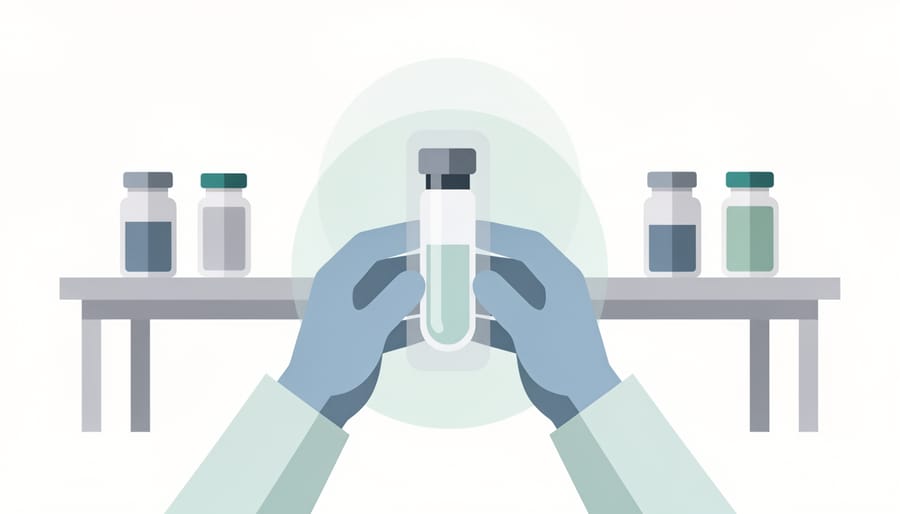
Planning the Work and Choosing Controls
Before anyone opens a container, a good lab team sits down and thinks the task through. This planning stage covers the first four steps of safe handling, and it often matters more than anything done at the bench.
The first step is a risk review. The team asks what the substance is, what could go wrong, and who might be affected. Toxicologists and safety officers help by connecting the known hazards to the specific task, whether that means weighing a powder or mixing a solution.
The second step is deciding whether the work can be made simpler. Could a smaller amount do the job? Could a less hazardous form of the material be used? Reducing the hazard at the source is always the strongest protection.
The third step is containment. If the hazard can’t be removed, the next question is how to keep it away from people. Ventilated enclosures such as fume hoods, closed containers, and designated work areas all serve this purpose.
The fourth step is protective equipment, such as gloves, eye protection, and lab coats. This comes last on purpose. Equipment protects one person at a time and depends on being worn correctly, so it works best as a final layer rather than the only one.
Layering controls this way means no single failure leaves someone exposed. Planning together, and inviting questions from everyone involved, is what makes the approach work.
Working, Storing, and Disposing With Care
Once the planning is done, the habits that matter most are the quiet, repeatable ones. During handling, work deliberately: keep only what you need at the bench, close containers as soon as you’ve taken what you need, and keep your work area tidy so a small spill is easy to spot. Wearing the right protective equipment every time, even for a quick task, is what keeps good practice from slipping into shortcuts.
Storage and labelling prevent a surprising number of accidents. Every container should carry a clear label with the substance name, hazards, and date, and nothing should sit in an unmarked bottle “just for now.” Chemicals that react badly together belong in separate, compatible storage, and anything stored should be off the floor and out of reach of casual access. The same everyday principle applies in homes and workplaces alike, and it is a core part of preventing poisoning at every level.
Finally, close the loop. Waste is collected in labelled, appropriate containers and disposed of through approved channels, never poured down a drain or tossed in regular trash. Records of what was used, stored, and discarded give teams a reliable picture if questions ever arise, and they help toxicologists and healthcare providers respond quickly and accurately.
What Happens When Something Goes Wrong: Emergency Readiness and Poison Support
Even in well-run labs, accidents can happen, and preparation is what keeps a small incident from becoming a serious one. Before work begins, teams confirm where the eyewash station, safety shower, spill kit, and emergency numbers are, and everyone knows who to tell if something goes wrong.
If a spill, splash, or accidental exposure occurs, the first priorities are simple:
– Get safe: Move away from the area and, if fumes or dust are involved, step into fresh air.
– Rinse promptly: Flush skin or eyes with plenty of clean water, and remove contaminated clothing.
– Tell a supervisor: Report the incident right away so others can be protected and the area secured.
– Get expert advice: Bring the product name or safety data sheet if it is safe to do so.
Please do not wait for symptoms to appear before asking for guidance. Calling early is almost always better than calling late, and it never counts as an overreaction. You can call a poison hotline at any hour, and a trained specialist will help you decide what to do next.
This is where a poison centre like CAPCC becomes a valuable partner. Our specialists are available 24/7 to support healthcare providers and patients across Atlantic Canada. We offer consultation, treatment guidance, and ongoing monitoring, so that care continues until the person has recovered. Because we work alongside emergency teams, labs, and families, the advice reflects the exposure, the substance, and the individual involved.
Knowing that help is one call away is reassuring, and it is a core part of safe laboratory practice.
Verification and Next Steps: Confirming Your Lab’s Safety Practices Are Working
Safe handling isn’t a one-time setup. Labs confirm it works by checking it again and again, and that habit is what keeps good practice from quietly slipping. Toxicologists, safety officers, and researchers do this together, comparing what the paperwork says with what actually happens at the bench.
A strong review rests on routine checks and honest conversation. Teams look at equipment, revisit safety data, run short drills, and talk openly about what went well or poorly. Here is a practical checklist to build into your schedule:
- Confirm that labels and safety data sheets are current and easy to find.
- Test eyewash stations and ventilation on a set schedule, and record the results.
- Review procedures after any incident or near-miss, without assigning blame.
- Refresh training regularly, including emergency drills.
- Save poison information contact numbers where everyone can see them.
Feedback matters just as much as inspection. Staff who feel comfortable raising a concern often spot problems long before an equipment test would. Supervisors can encourage this by treating every question as a contribution to safety.
For next steps, lab staff can ask their safety officer when procedures were last reviewed. Supervisors can check that their workplace safety policy reflects current practice and that training records are up to date. Families of people who work with chemicals can learn the basics of first aid and keep the local poison information number handy. Education is ongoing, and CAPCC is here to support healthcare providers, workplaces, and families across Atlantic Canada with guidance and consultation whenever questions arise.
Common Questions About Research Chemical Safety
Most people have the same few questions when they first learn how labs manage research chemicals. The short answers below are meant to be practical and reassuring.
What is the very first thing a toxicologist asks about a new chemical?
The first question is simply “What exactly is this substance, and what do we know about its hazards?” Confirming identity through labelling and supplier documentation comes before any decision about how to handle it.
What if there is little safety information available?
When data is limited, labs treat the substance with extra caution, using stronger containment and protective measures until more is known. Toxicologists and safety officers often review these situations together before any work begins.
What should I do after an accidental splash or exposure?
Move away from the area, rinse the affected skin or eyes with plenty of water, or get to fresh air if you breathed something in, and tell a supervisor right away. Then contact a poison information service for guidance on next steps.
Who can I call for advice, and is the service available around the clock?
Poison information services provide free, confidential advice from specialists at any hour. In Atlantic Canada, CAPCC offers 24/7 consultation for both healthcare providers and members of the public.
Families often wonder how they can help a loved one who works with chemicals. Simply being curious and supportive goes a long way. Ask about the safety practices at their workplace, encourage them to speak up when something feels unclear, and make sure they know where to find emergency numbers. Having the poison information line saved in a phone is a small step that can make a real difference. Safe handling works best as a shared effort, and asking questions is always welcome.
Safe handling of research chemicals comes down to a handful of steady habits. Know exactly what the substance is and what it can do. Think through how someone could be exposed, whether by breathing it in, touching it, or swallowing it. Use layered controls, so that no single safeguard carries the whole load. Be ready for the unexpected, with first-aid supplies, emergency contacts, and a clear plan. And check regularly that all of it still works through equipment checks, training refreshers, drills, and honest incident review.
None of this requires perfection or specialist knowledge on day one. These steps are achievable, and they work best when researchers, supervisors, safety officers, and toxicologists share the load and feel free to ask questions. Stopping to ask for help is part of good practice, not a sign of weakness.
If you work with chemicals, supervise those who do, or care for someone who does, you are not on your own. The Atlantic Canada Poison Centre (CAPCC) offers education and 24/7 consultation. Reach out to CAPCC or your local poison information service whenever you have a question or concern.