

A workplace health and safety policy is a written document that outlines your organization’s commitment to protecting employees from harm and establishes the procedures to achieve that goal. In Canada, employers are legally required to maintain a health and safety program, with the policy serving as its foundation. In Ontario, for example, you must review this policy at least once a year, ensuring it remains current with evolving workplace hazards and regulatory standards.
The policy does more than satisfy compliance requirements. It sets clear expectations for everyone in your workplace, from senior leadership to frontline staff, about their roles in maintaining a safe environment. When developed thoughtfully, it becomes a practical tool that guides decision-making during daily operations and emergency situations alike.
At minimum, your policy must include written procedures for high-risk activities such as lockout protocols and confined space entry. Beyond these mandatory elements, an effective policy communicates management’s genuine commitment to worker safety, carries senior leadership signatures, and receives regular updates as workplace conditions change. The same attention to detail that applies to food poisoning prevention in commercial kitchens extends to every hazard your employees might encounter, from chemical exposures to ergonomic risks.
This article walks you through the essential components of a compliant health and safety policy, explains how to customize it for your specific workplace, and highlights best practices that transform a required document into a genuine safety culture asset. Whether you’re drafting your first policy or updating an existing one, understanding both the legal requirements and the collaborative approach needed will help you create documentation that truly protects your team.
Why a Written Health and Safety Policy Is Legally Required
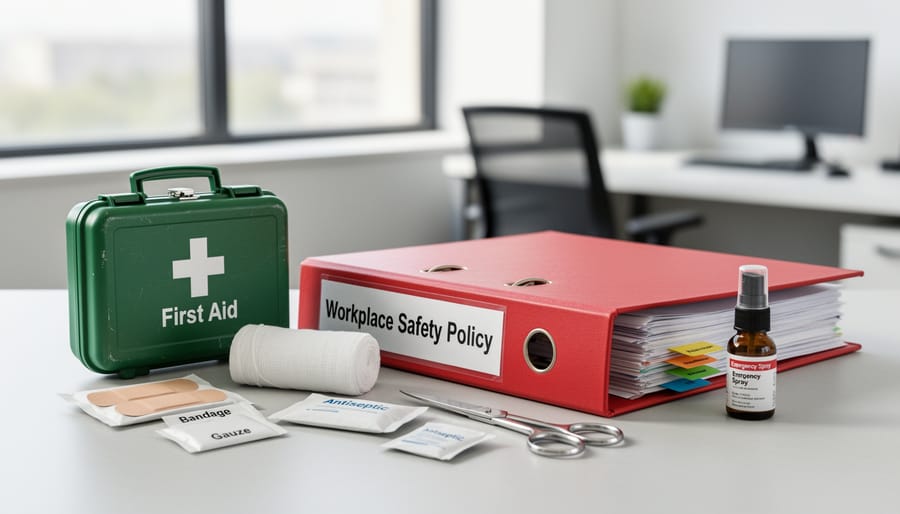
In Canada, a written health and safety policy is not a best practice, it is a legal requirement. Canadian health and safety legislation mandates that employers establish a health and safety program in their workplace, and a written safety policy cornerstone serves as the foundation of that program. Without a documented policy, employers fail to meet basic regulatory standards and leave their organization vulnerable to compliance gaps.
The purpose of putting the policy in writing goes beyond checking a compliance box. A formal document ensures that the employer’s commitment to worker health and safety is clearly communicated, consistently applied, and accessible to everyone in the organization. It establishes accountability by defining who is responsible for what, from senior leadership down to frontline supervisors and workers. A written policy also provides a reference point when new hazards emerge, workplace conditions change, or questions arise about safety procedures.
Formalizing the policy creates consistency across shifts, departments, and work sites. Verbal commitments fade, turnover erodes institutional memory, and informal practices vary widely. A documented policy standardizes expectations and ensures that every worker, regardless of when they were hired or where they work, understands the organization’s safety framework. For workplaces handling toxicological hazards or poison exposure risks, this consistency is critical, emergency response protocols and hazard communication cannot be left to guesswork or unwritten tradition.
Meeting regulatory standards also means the policy must be kept current. Legislation, workplace hazards, and operational realities evolve, and the written policy must evolve with them to remain compliant and effective.
Core Elements Every Workplace Health and Safety Policy Must Include
Employer Commitment and Leadership Accountability

A workplace health and safety policy carries weight only when it reflects genuine organizational commitment, and that commitment must come from the top. Senior management’s signature on the policy is not a formality, it is a public declaration that protecting workers is a core business priority. This visible endorsement signals to employees that safety decisions will be supported, resources will be allocated, and leadership will be held accountable when standards are not met.
The written commitment statement should be clear and unambiguous. It must communicate that the employer values a healthy and safe workforce, recognizes the duty to prevent harm, and commits to complying with applicable health and safety legislation. This statement sets the tone for the entire program and makes explicit that worker well-being is not negotiable. Without senior management ownership, even well-drafted policies risk being treated as paperwork rather than principle.
Leadership accountability goes beyond signing a document. Management must demonstrate follow-through by allocating adequate resources, participating in safety committees, and responding promptly when hazards are identified. When employees see that leadership takes safety seriously in practice, they are more likely to engage with safety procedures, report concerns, and contribute to a culture where prevention is everyone’s responsibility.
High-Risk Task Procedures
Canadian occupational health and safety legislation requires employers to develop written procedures for high-risk tasks as a minimum component of their workplace health and safety policy. These documented procedures must describe step-by-step how workers should safely perform complex or hazardous operations, ensuring consistency and reducing the risk of injury or exposure.
Common high-risk tasks requiring written procedures include lockout/tagout protocols for controlling hazardous energy, confined space entry where atmospheric hazards or limited egress create danger, working at heights, and handling or storage of hazardous materials. In work environments with potential poison exposure, such as laboratories handling toxic substances, healthcare facilities managing pharmaceuticals, or industrial sites using chemical agents, written procedures must address containment, decontamination, personal protective equipment requirements, and emergency response protocols specific to toxicological hazards.
Effective procedures outline each critical step, identify required safety equipment, assign responsibilities, and specify when expert consultation or additional training is necessary. They serve as both a training tool for new workers and a reference during actual operations, helping prevent incidents that could result in poisoning, chemical burns, or other serious harm.
Annual Review and Update Requirements
Ontario law requires employers to review policies at least annually and similar obligations exist across other Canadian provinces. This annual review applies to your occupational health and safety policy, workplace violence policy, and harassment policy. The requirement is not a formality. It ensures your written policies reflect current workplace realities, new hazards, staffing changes, and any legislative amendments that may have taken effect since your last review.
Why does the annual review matter? Workplaces evolve. You may introduce new equipment, change processes, hire additional staff, or face emerging hazards such as new chemical substances or infectious agents. A policy written three years ago may no longer address the risks your workers encounter today. Regular reviews catch these gaps before they lead to incidents. They also signal to employees that safety is an ongoing priority, not a one-time exercise.
During each review, assess whether the policy still covers all high-risk activities, whether roles and responsibilities remain accurate, and whether contact information for safety representatives or emergency resources is up to date. If your workplace handles substances that pose toxicological risks, confirm that poison prevention procedures and emergency consultation protocols are clearly described and accessible. Document the review by recording the date and having senior management sign off, just as they did when the policy was first issued. If you identify necessary changes, update the policy immediately and communicate revisions to all employees. Treating the annual review as a meaningful checkpoint, rather than a checkbox, strengthens your entire health and safety program.
Customizing Sample Policies to Your Workplace
Sample health and safety policies serve as useful starting points, but copying one verbatim can leave your workplace exposed. A policy borrowed from a manufacturing facility won’t address the hazards in a healthcare clinic, and a template designed for office work won’t cover the risks in a laboratory handling chemical reagents. Customization isn’t optional, it’s the difference between a document that protects your workers and one that merely occupies a binder.
Start by identifying the specific hazards present in your workplace. Walk through your site and list what workers encounter: machinery, chemicals, biological materials, heights, confined spaces, or exposure to toxicological agents. If your operations involve handling cleaning products, solvents, pharmaceuticals, or industrial chemicals, your policy must address poison prevention, labeling requirements, and emergency response procedures for exposure incidents.
Next, adapt the policy language to reflect your actual roles and reporting structure. Replace generic titles like “supervisor” with the real job titles used in your organization. Specify who conducts hazard assessments, who reviews incidents, and who workers contact when they identify unsafe conditions. If your workplace has unique high-risk tasks, such as mixing chemical solutions or administering medications, document the safe procedures for those activities in detail.
Consider your emergency response resources. Does your policy reference the correct local emergency numbers, on-site first aid stations, and nearest medical facilities? Workplaces with toxicological risks should include protocols for contacting poison control centers and ensuring rapid access to safety data sheets.
Customization also means removing irrelevant content. If your template includes sections on construction site safety but you operate a pharmacy, cut the construction language and expand the sections on medication handling and contamination control. A tailored policy demonstrates genuine commitment to worker safety, not just regulatory compliance.
Integrating Poison Prevention and Toxicological Safety
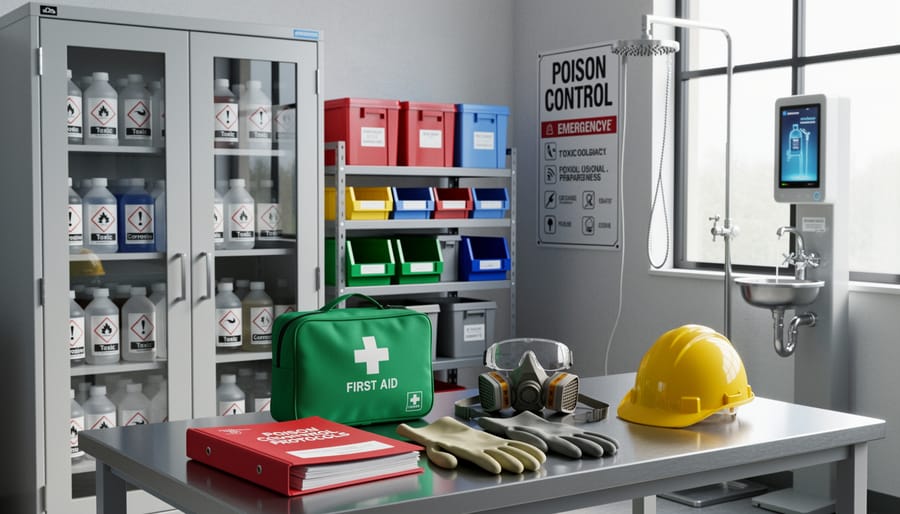
Workplaces handling chemicals, pharmaceuticals, cleaning agents, or laboratory materials face distinct toxicological hazards that demand specific attention in their health and safety policies. Healthcare facilities, industrial sites, research laboratories, and custodial operations should explicitly address poison exposure risks and prevention measures tailored to their operations.
A comprehensive policy in these settings identifies substances of concern, outlines safe handling and storage protocols, mandates hazard communication through proper labelling and safety data sheets, and establishes emergency response procedures for exposure incidents. Training on what to know about poison should be formalized as part of onboarding and refresher programs, ensuring workers recognize exposure symptoms and understand first-response steps.
For environments where common cleaning products or maintenance chemicals pose risks, principles of preventing household poisoning translate directly into workplace controls: secure storage, proper dilution, adequate ventilation, and personal protective equipment requirements. Policies should specify who is authorized to handle high-risk substances and under what conditions.
Collaboration with poison control resources strengthens workplace preparedness. Organizations like the Canadian Association of Poison Control Centres offer emergency consultation services available 24 hours, expert advice on exposure management, and educational materials that help employers develop evidence-based safety procedures. Documenting these external partnerships in your policy demonstrates commitment to specialized expertise and provides workers with clear guidance on when and how to access toxicological support during incidents. Regular consultation ensures your policy reflects current best practices in poison prevention and workplace safety.
Common Questions About Workplace Health and Safety Policies
How do I communicate the policy to all workers?
Post the policy in a visible location at the workplace, provide copies during orientation, and review it at safety meetings. Ensure all employees, including new hires and contractors, acknowledge they have read and understood the policy.
What happens if workplace conditions change after the policy is written?
Update the policy as soon as significant changes occur, such as new equipment, processes, or identified hazards. Ontario legislation requires a formal review at least once a year, but amendments should happen whenever circumstances warrant them.
Who is responsible for ensuring the policy is followed?
While senior management signs and endorses the policy, supervisors and managers at all levels share responsibility for day-to-day enforcement. Workers also have a duty to comply with safety procedures and report hazards.
Do I need separate procedures for every task?
Not every task requires its own written procedure. Focus on high-risk or complex activities such as confined space entry, lockout, hazardous material handling, and situations where workers could be exposed to risks like poisoning from medications or chemical substances.
Employers sometimes worry that policy documentation is a one-time task, but effective health and safety management is an ongoing process. A policy sits idle unless it is actively communicated, enforced, and updated. Regular training sessions reinforce expectations and keep safety top of mind.
Documentation serves multiple purposes beyond compliance. It provides a clear reference point when questions arise, supports investigations after incidents, and demonstrates due diligence. Keep records of policy reviews, training attendance, and any amendments made over time. This trail of documentation protects both the organization and its workers by showing a consistent commitment to safety.
A comprehensive health and safety policy isn’t a one-time administrative hurdle, it’s the living foundation of your workplace safety program. By committing to a written policy that reflects your specific operations, hazards, and workforce, you create a clear framework that protects employees and demonstrates leadership accountability. This document becomes meaningful only when it’s current, customized, and actively used to guide daily decisions.
Treat policy development and review as an ongoing responsibility, not a checkbox exercise. As your workplace evolves, new equipment arrives, processes change, staff turn over, your policy must keep pace. Ontario’s annual review mandate exists for good reason: a stale policy quickly becomes irrelevant and fails to protect workers from emerging risks.
Don’t hesitate to seek expert guidance, especially for specialized hazards like toxicological exposures or poison prevention. Collaboration with health and safety resources strengthens your program and equips your team with knowledge that prevents harm before it occurs. A well-crafted policy, backed by education and genuine commitment, creates a culture where safety is integrated into every task and every worker understands their role in maintaining a healthy workplace.